
A Little Concrete and Some Scrap Wood
Two leftover bags of concrete and a few pieces of scrap wood gave one of House 173’s oldest rooms a useful little upgrade.
Here’s another old House 173 project that somehow never made it onto the blog: putting a new concrete floor in the cold cellar. I completed the work back in 2010, when I was still taking project photographs more for myself than for some future website. That explains both why the post is arriving fourteen years late and why some of the pictures look as though they may have been taken through a slightly foggy aquarium.
Still, this little project has held up well, and the cold cellar remains one of those quiet features that makes an old house feel different from a newer one. It sits just off the laundry room, tucked behind a simple batten door that looks as though it has always known exactly what belongs on the other side.

An Old-School Cold Cellar
The cold cellar is one of the neatest, and most old-fashioned, features here at House 173. It’s dark, lit by only a single bare bulb, and the temperature stays somewhere between fifty and sixty degrees for most of the year. The room is lined with deep wooden shelves, and even when it’s empty, it has the feeling of a place built for jars, baskets, potatoes, onions, apples, and whatever else a household once needed to keep cool before refrigerators became the center of every kitchen.
I don’t know exactly how the original owners used it, but it’s easy to imagine shelves filled with canned vegetables, preserves, and supplies put away for winter. That may be part of why I’ve always liked the room. It isn’t decorative. It doesn’t try to impress anyone. It simply has a job and has quietly kept doing it for nearly a century.
The cellar is also separated from the rest of the basement just enough to feel like its own little world. Open the batten door, pull the chain on the bare bulb, and suddenly you’re standing in a room that probably doesn’t look dramatically different from the way it did decades ago.
By 2010, however, one thing did need attention: the floor.


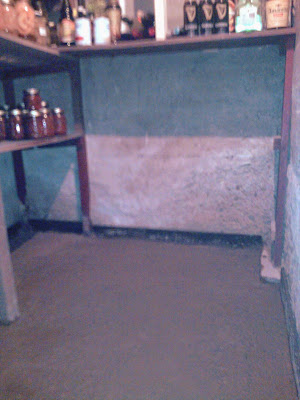


(Sorry about the quality of the pictures, back in 2010 I was really just starting to get into the whole smartphone scene!)
The existing surface was rough, uneven, and difficult to keep clean. It wasn’t a crisis by any means, but it had reached that familiar old-house stage where you find yourself thinking, “This has probably been good enough for a long time, but it could be better.”
I wasn’t looking to turn the cold cellar into a finished room. That would have defeated much of its charm and probably its usefulness. I simply wanted a cleaner, more solid surface underfoot that would make sweeping easier and give the shelving a more dependable base.

As luck would have it, I had a couple of leftover bags of concrete sitting in the workshop. They had reached that dangerous stage where they were either going to become part of a useful project or remain in the corner until they hardened into two extraordinarily heavy bags of uselessness.
The cold cellar seemed like the perfect destination.
I mixed the concrete in small batches, spread it across the existing floor, and worked it into a reasonably smooth surface. This was not a decorative, highly polished concrete installation destined for the pages of a design magazine. It was a cold-cellar floor. The goal was solid, level enough, and easier to clean.
It took only about an hour to place and finish the concrete. Then, like so many projects, the shortest part was the actual work and the longest part was waiting for it to cure before I could put everything back.

Improving the Shelving with Scrap Wood
Of course, once the floor looked better, the shelving began to look as though it wanted a little attention too.
Most of the existing shelves were still perfectly serviceable, and I had no desire to replace old wood simply for the sake of making everything look new. Instead, I reinforced a few areas that had begun to sag, added another shelf where there was unused space, and built a small wine rack into the arrangement.

As with the concrete, much of the lumber came from scraps already waiting in the workshop. Nothing fancy, nothing purchased as part of some grand cold-cellar renovation plan, just useful pieces of wood finally finding the project they had apparently been saving themselves for.

The new wood looked a little too new beside the older shelving, so I gave it a coat of stain. I wasn’t trying to create a perfect match or fake a hundred years of age. I simply wanted the additions to settle into the room without announcing themselves every time the light came on.

The result was close enough. The strengthened shelves were more useful, the new shelf added storage, and the wine rack gave a few bottles a proper home in one of the (literally) coolest rooms in the house.
Still Useful All These Years Later
I understand that this is not the most dramatic project ever completed at House 173. There was no major reveal, no complicated joinery, and no color debate involving seventeen sample pots. Just a little concrete, some scrap lumber, and a few hours spent making an old room work better.
But more than a decade later, the floor is still doing its job. The shelves are still holding what we ask them to hold, and the little wine rack is still tucked into a room that remains cool, dim, and pleasantly old-fashioned.
That may be why I wanted to finally add this project to the blog. Not every improvement needs to transform a room. Some simply help an old feature continue doing what it was built to do.
And when the materials are already sitting in the workshop waiting for a purpose, all the better.
Hey, thanks for stopping by, see ya’ next time!
Every old house has at least one room that feels as though it belongs to the house more than it belongs to the people living there.
At House 173, I suspect that room may be the cold cellar.
The bare bulb, rough shelving, batten door, and steady cool air create the kind of space a child would find mysterious and an adult would immediately begin filling with jars, tools, and things that should probably be labeled. It is not conventionally attractive, but it has atmosphere, and usefulness, which is better.
I liked that you resisted the urge to renovate the personality out of it. You didn’t add recessed lighting, drywall the walls, or turn it into a climate-controlled wine room with a tasting table. You poured a better floor, strengthened the shelves, and used leftover materials to make an old space continue working.
That feels exactly right.
There is also something satisfying about discovering that two bags of concrete and some scrap wood have survived as a useful improvement for well over a decade. Projects like this rarely receive much admiration when they are finished. Nobody gathers the family to unveil a cellar floor.
But years later, it is still level, still sweepable, and still holding up the room above it.
That is the kind of quiet success old houses are built on. - The Basement Explorer
Frequently Asked Questions
What is a cold cellar?
A cold cellar is an unheated storage room designed to remain cooler than the rest of a house. Traditionally, it was used for storing root vegetables, apples, canned foods, preserves, and other supplies before modern refrigeration became common.
How cool does a cold cellar stay?
Temperatures vary according to climate, ventilation, construction, and location within the house. The cold cellar at House 173 generally remains between approximately fifty and sixty degrees throughout the year.
Can leftover concrete be used for a small cellar floor?
Yes, provided the concrete mix has been stored properly and has not absorbed moisture or hardened in the bag. Small areas can be good uses for leftover material, though the existing surface should be stable and properly prepared before new concrete is placed.
Why not completely modernize an old cold cellar?
Modern finishes can interfere with the airflow, temperature, humidity, and character that make a cold cellar useful. Improvements should address safety and function without necessarily turning the room into conventional finished living space.
Can scrap lumber be used for cellar shelving?
Scrap lumber can work well if it is structurally sound, dry, and strong enough for the intended load. Shelves holding canned goods, bottles, or heavy containers need adequate support and should be checked periodically for sagging or moisture damage.
What can be stored in a cold cellar today?
Depending on the room’s temperature and humidity, it may be useful for beverages, canned goods, unopened pantry supplies, root vegetables, wine, and items that benefit from cooler storage. Food-storage guidance should still be followed, since a cold cellar is not a substitute for refrigeration.
Keywords
cold cellar renovation, root cellar floor, concrete cellar floor, old house cold cellar, basement storage room, scrap wood shelving, wine storage shelf, legacy house project, old house maintenance, House 173
إرسال تعليق